
Motion Control: Choose the Viewpoint Before the Path
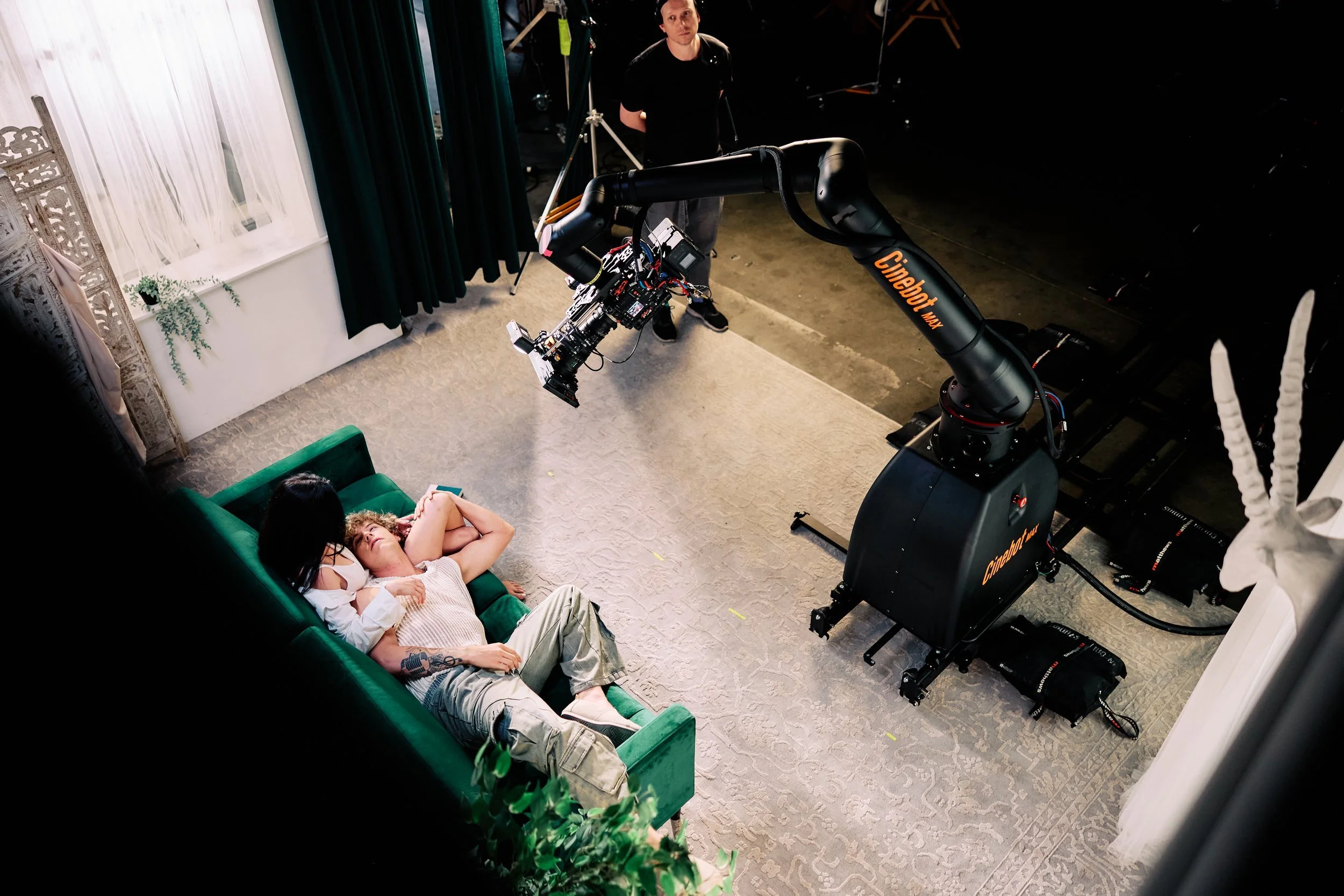
Photograph: Sean Jorgensen. Original image from Cinebot Vegas.
The camera move is smooth. The opening and closing frames are attractive. Yet the commercial feels strangely distant from the person or product at its centre. Adding another turn to the path may give the camera more to do without giving the audience a better image.
Before refining a motion-control move, look at where the camera sees the scene from. Camera position, lens choice and the arrangement of the set form one creative decision. A repeatable path preserves that decision across takes; it does not decide whether the viewpoint serves the campaign.
MRMC describes the Cinebot Max as capable of repeatable camera moves for studio and location work. That capability becomes useful when the team has something specific to compare. Start with the image the move should make, then develop the route that sustains it.
Choose a relationship, not just a frame size
Imagine a hypothetical Las Vegas footwear commercial. A performer crosses a sculptural studio set, and the final composition needs to connect the shoe with the performer's stance. This is an invented concept, not a Cinebot Vegas production.
One proposal places the camera close to the shoe with the performer extending into the background. Another moves the camera farther away and chooses a longer focal length to maintain the intended shoe size. Those proposals may give the product similar prominence while presenting its relationship to the person differently.
The discussion should therefore include distance and viewpoint alongside focal length. A tighter frame alone does not explain why the product feels imposing, intimate or detached. Ask which spatial relationship belongs to the brand idea, and judge the proposed camera position against that intention.
Canon's perspective explanation offers a visual comparison of foreground and background relationships across lens choices. For a production decision, keep track of camera position as well as the lens. Changing focal length from one position and moving the camera to preserve subject size are different comparisons.
Make the background earn its place
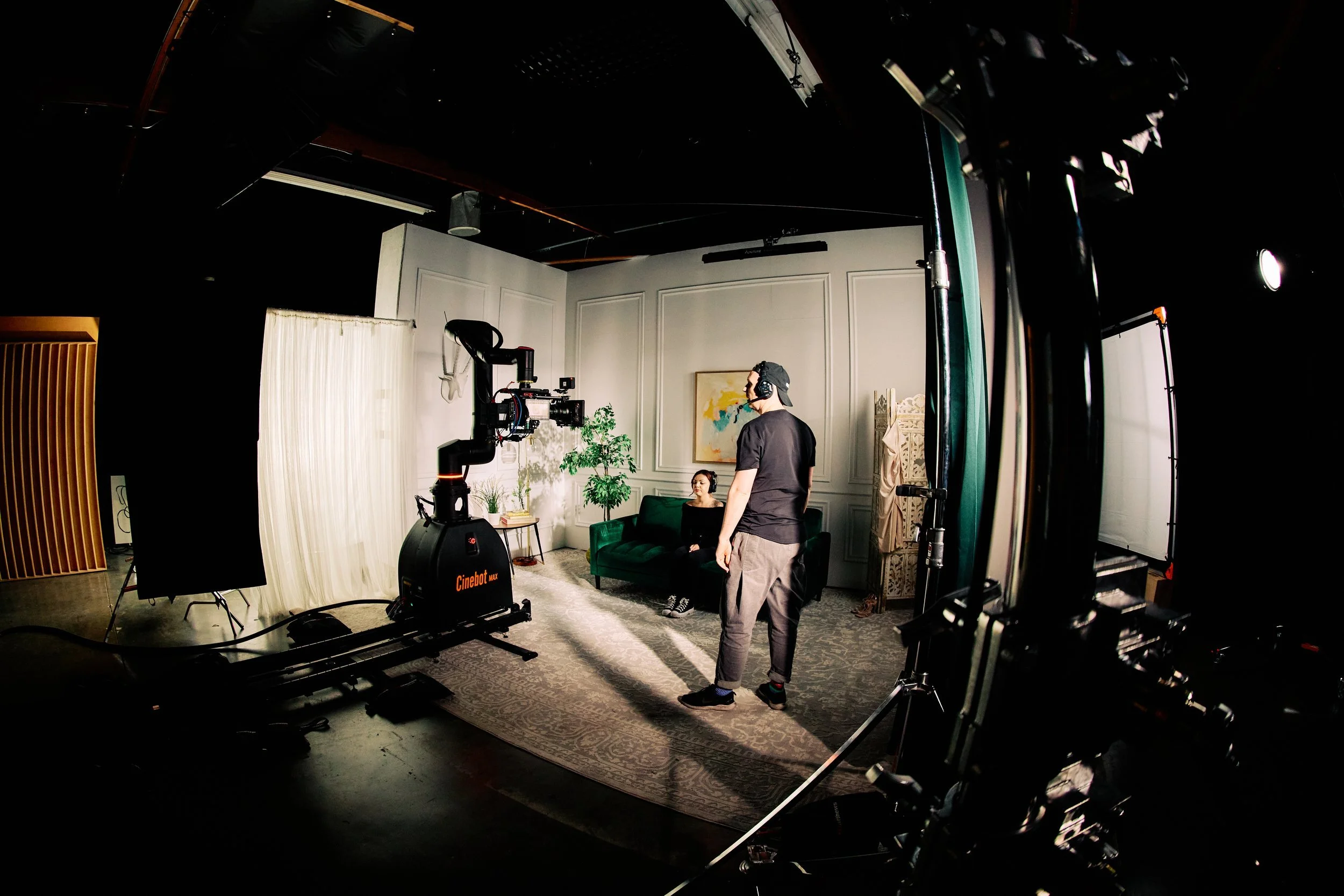
Photograph: Sean Jorgensen. Original image from Cinebot Vegas.
A camera move gives the set an active role. As the viewpoint changes, an edge that framed the performer may cover the product, or a background opening may become more prominent than the intended detail. Approving the final composition leaves those intermediate relationships unresolved.
In the imagined footwear spot, a set panel could provide a clear graphic line behind the shoe at the finish. Earlier in the move, that same panel might divide the performer's body awkwardly. The solution could be a different viewpoint, revised blocking or a production-design adjustment. A more complicated camera path is only one possibility.
For a Las Vegas location campaign, decide how much the actual place needs to register. If recognizable architecture carries the message, compare frames that show its relationship to the subject. If the brief needs an abstract environment, the same background information may distract. Location scale is a creative ingredient rather than a requirement to show everything available.
Watch the passage between approved frames
Play the proposed sequence with attention to the middle. Can the viewer continue to read the product? Does the performer's face disappear at an unhelpful moment? Does a foreground element become the strongest shape just as the campaign detail needs attention?
In the footwear concept, the closing pose might be excellent while the moving shot repeatedly hides the shoe behind the other leg. That is a blocking and viewpoint question before it becomes a request for faster camera movement. Ask the director, cinematographer and motion-control crew to evaluate the same passage together.
Speed changes the time available to read an image, but it does not repair every compositional problem. Compare the route at the intended rhythm and decide whether the important information survives. Where a pause helps, make that a deliberate editorial choice. Avoid asking the camera to make an unclear frame disappear quickly enough to escape notice.
Compare one creative choice at a time
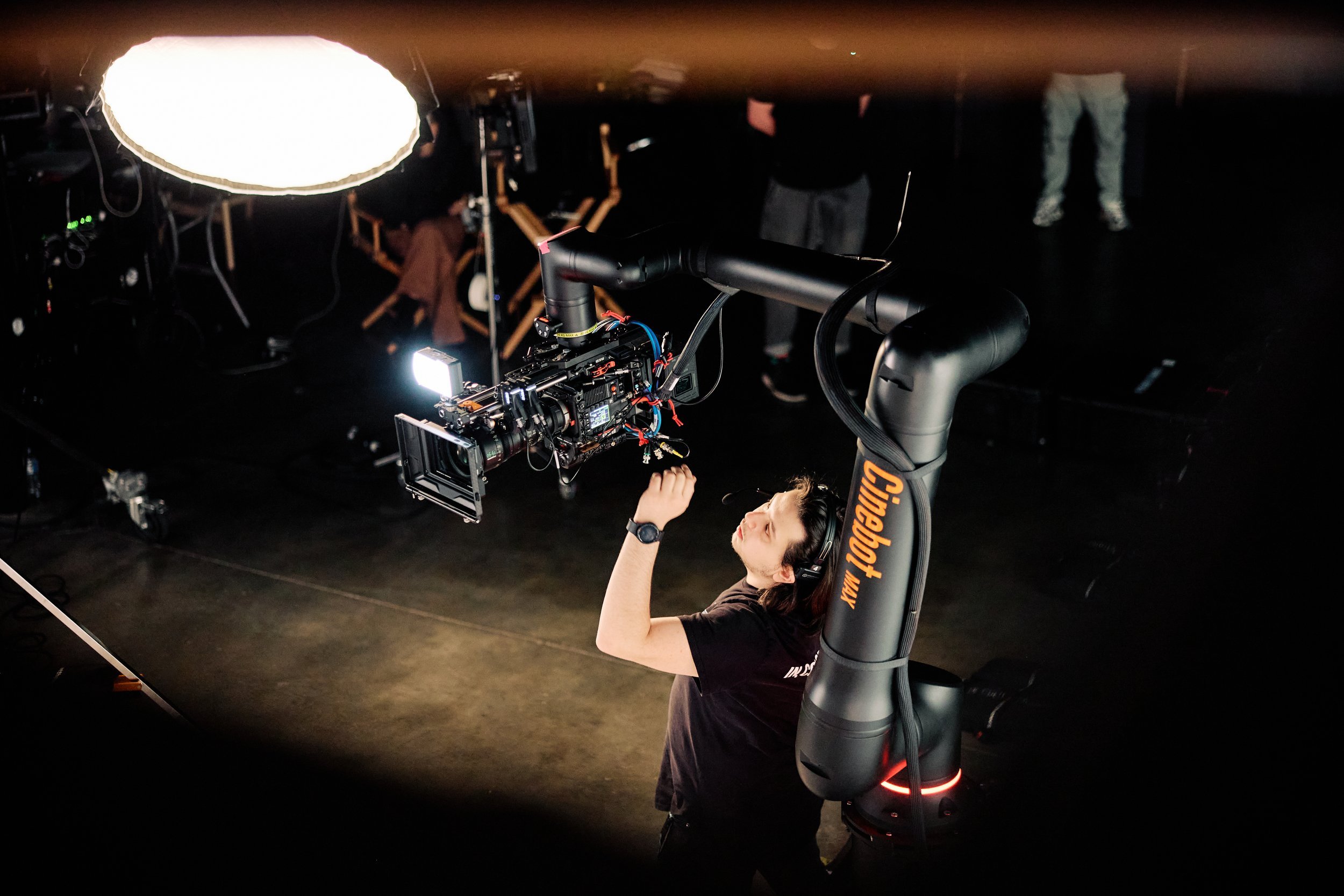
Photograph: Sean Jorgensen. Original image from Cinebot Vegas.
A useful comparison starts with a clear question: would a different camera distance improve the relationship between shoe and performer? Keep the creative intention consistent while the camera team develops alternatives. Record when a lens change also requires a new position, timing or route, so the discussion does not attribute every difference to the lens alone.
Repeatability can provide a consistent camera movement while the director explores a performance choice. Once the lens or viewpoint changes, reassess the resulting framing rather than assuming the approved image survives. The point is a readable comparison, not a promise that every production variable can remain fixed.
Judge the result through the actual camera image. A plan view can explain where equipment travels, but it cannot substitute for the composition the audience will see. Agree on what the comparison should resolve before adding more alternatives.
Bring the viewpoint into the production conversation
The Cinebot Vegas setup includes Cinebot Max with over 20 feet of track for large-scale commercial studio and on-location work. That supports a discussion involving performers and substantial environments. It does not establish which lens, route or unobstructed travel will suit a particular set.
Once a viewpoint has a creative reason, let the crew assess it against the camera package and real environment. The earlier article on what to send before a motion-control shoot covers the practical handoff. Here, the essential decision is what the camera's relationship to the subject should communicate.
Discuss your proposed shot with Cinebot Vegas. Bring the image you want to protect, the alternative you want to compare and the moment where the move needs to make its point.
Original Cinebot Vegas website photographs reused without AI alteration. Photography credit: Sean Jorgensen, identified in embedded rights metadata. The footwear concept is hypothetical; these photographs do not depict that campaign.