
What to Send Before a Motion-Control Shoot
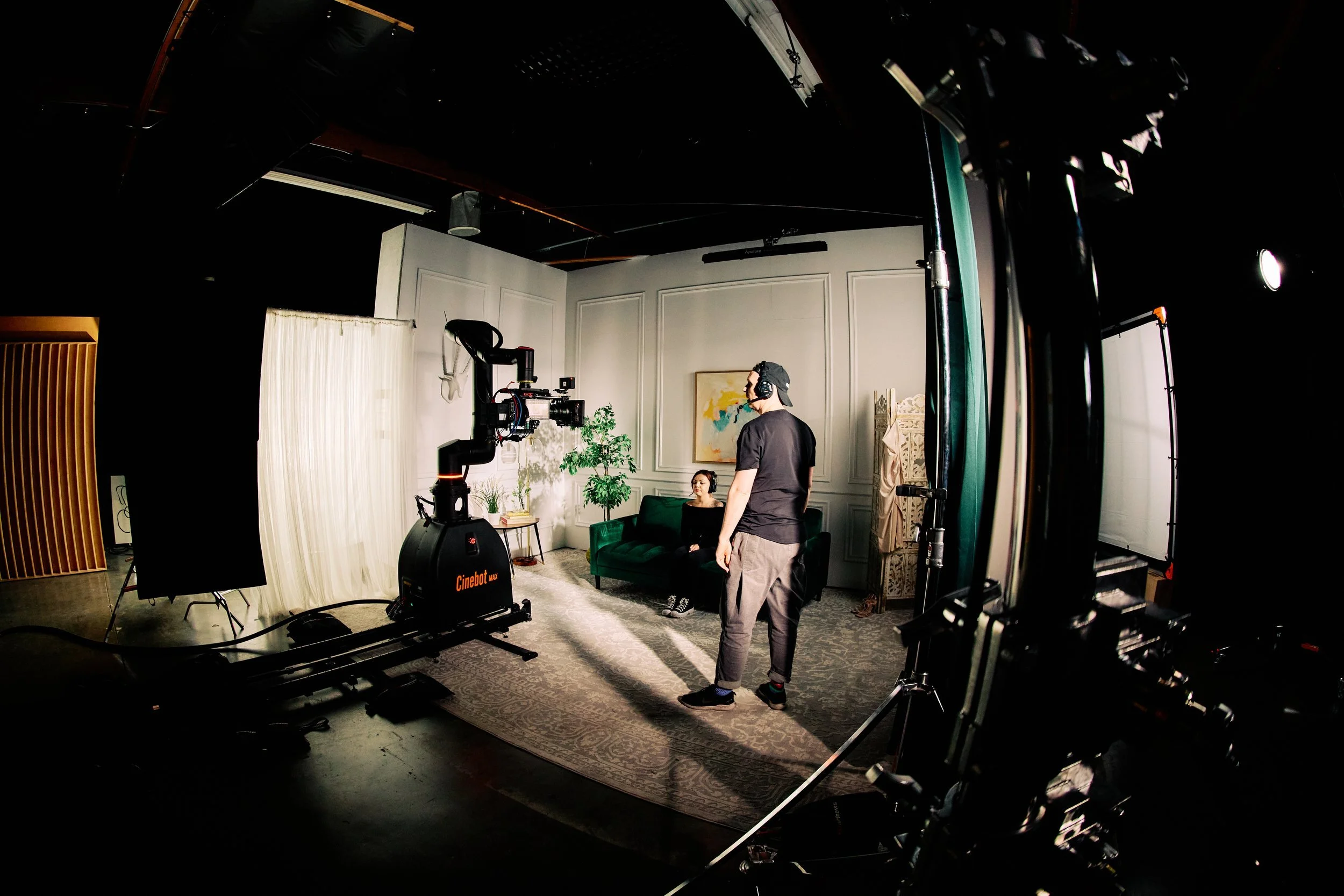
Photograph: Sean Jorgensen. Original image from Cinebot Vegas.
The reference film has the right energy: the camera passes a performer, changes height and lands on the campaign’s final frame. But a reference alone leaves a producer with important unanswered questions. Which part of that movement matters? What camera package will carry the look? And can the intended set support the journey?
Motion-control preparation starts by turning that ambition into information the creative and technical teams can assess together. MRMC’s Cinebot Max supports repeatable camera movement for studio and location applications. A useful brief explains what needs to repeat, what the audience should feel and which production choices are still open.
Annotate the reference, rather than asking for a copy
Send a treatment or storyboard with the reference, then identify the specific quality you want to explore. Perhaps it is a shift from a full-length performance to an intimate portrait, or a camera arrival timed to a gesture. Distinguish the camera movement from the lighting, editing and performance that make the reference compelling.
For a hypothetical Las Vegas fashion campaign, imagine the camera travelling beside a performer before settling into a final portrait. The brief might say: preserve the sense of forward momentum, keep the clothing readable during the move and give the closing expression time to register. That is a creative direction the team can evaluate. It is not a claim that Cinebot Vegas has filmed this campaign.
Mark what is essential and what can change. If the final composition is fixed but the route into it is open, say so. That distinction gives the cinematographer and motion-control crew a useful problem to solve without treating every detail of another production as a requirement.
Share the intended camera package early
Photograph: Sean Jorgensen. Original image from Cinebot Vegas.
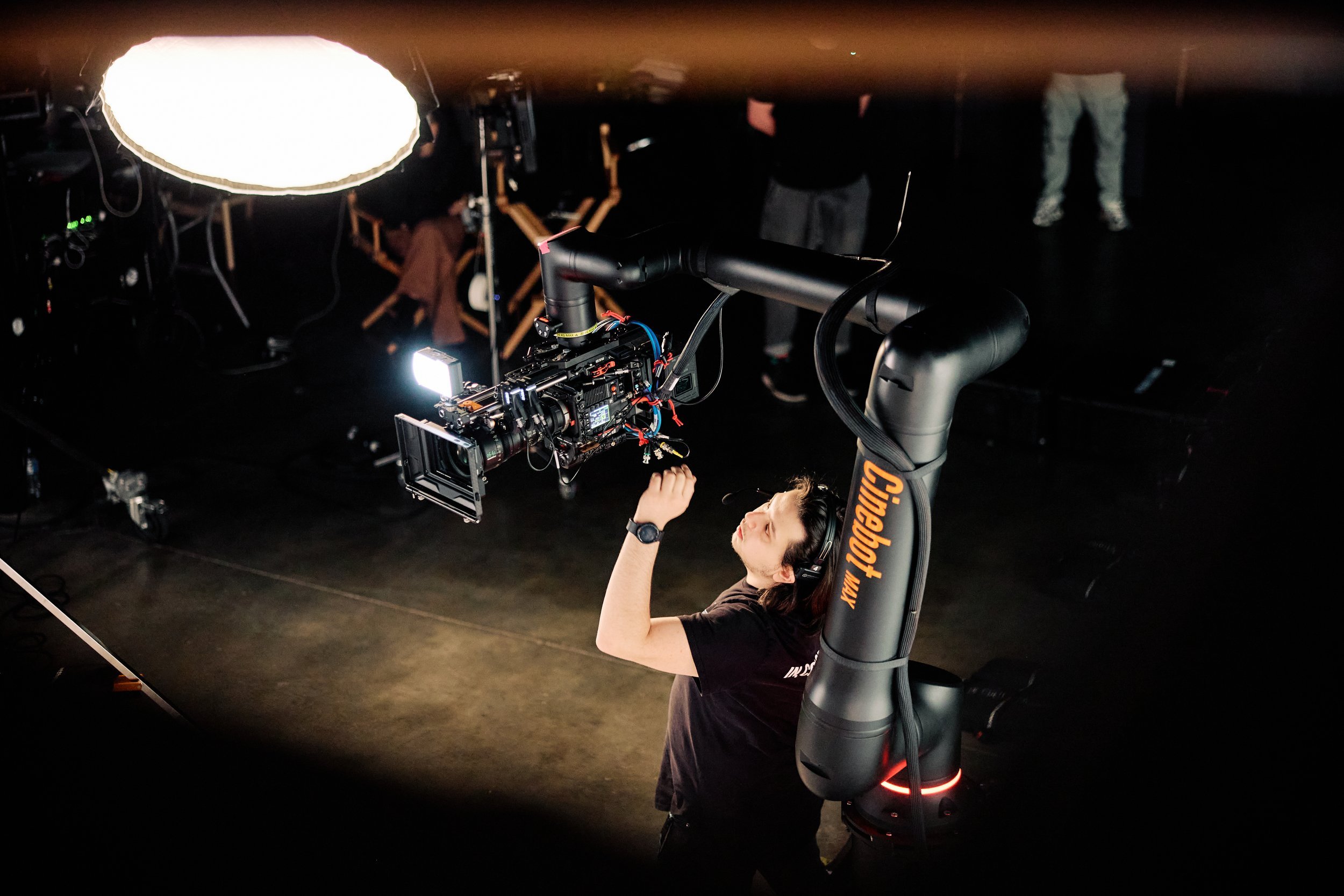
Include the proposed camera, lens and mounted accessories, with the information your camera team has confirmed. Where a choice is provisional, label it. The crew needs to assess the complete intended package, rather than a camera-body name detached from the equipment that will travel with it.
The creative reason for sharing this early is simple: the lens and camera position shape the image you are asking the movement to deliver. A reference photographed with a different perspective does not become equivalent just because the robot follows a similar route. Discuss framing and the camera package together before the treatment is treated as settled.
Manufacturer capabilities describe a system, while the production crew assesses the configured rig and shot. Avoid turning a published specification into approval for an unreviewed package. Ask what information is still needed to establish feasibility; do not fill those gaps with assumptions.
Separate camera timing from action timing
Write the important beats in the shot: where the performer begins, what action triggers the next moment and how long the closing image needs to read. If music or an edit already sets the pace, share the relevant timing reference. If the rhythm is exploratory, make that clear too.
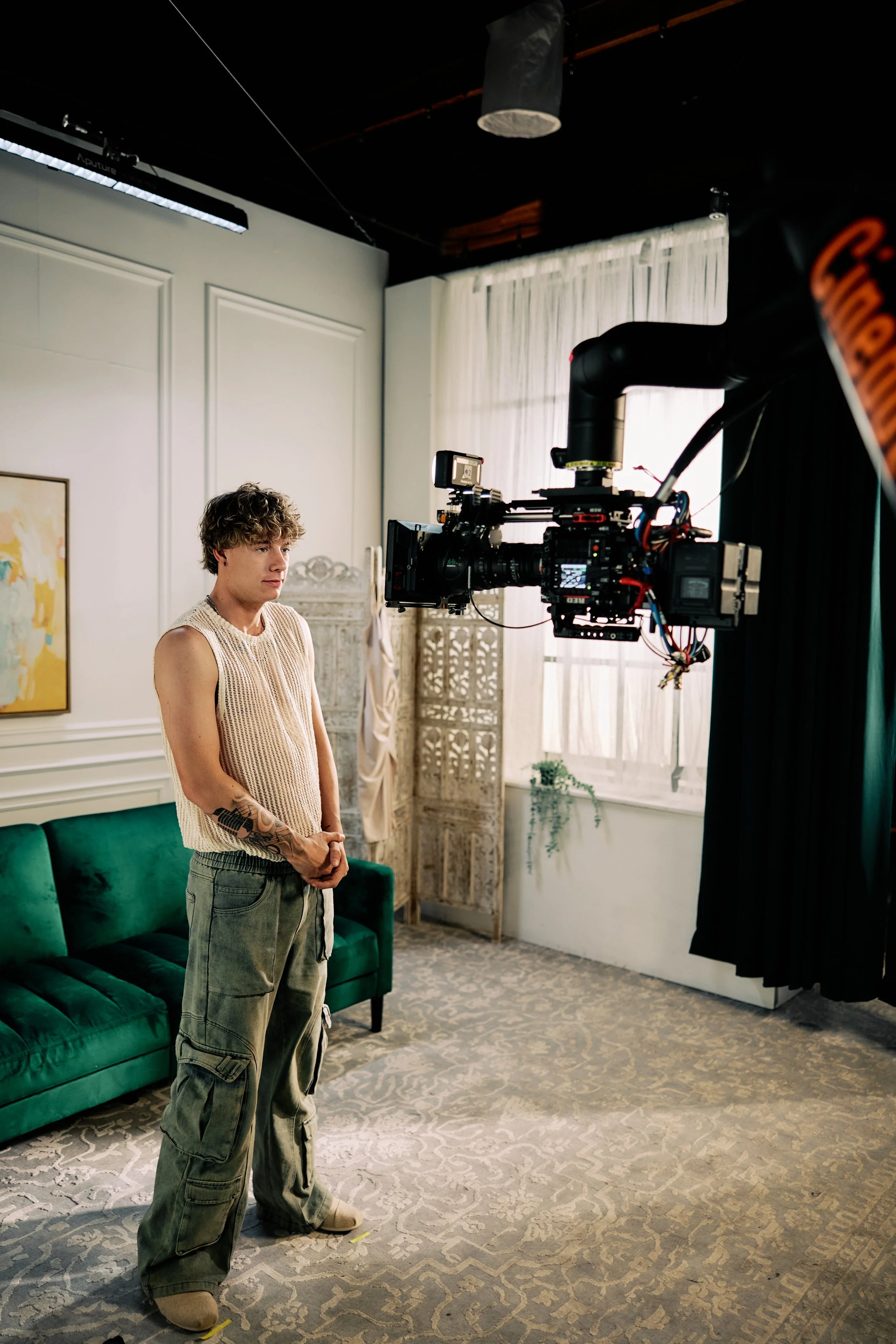
In the imagined fashion spot, the camera could maintain its planned move while the director explores the performer’s expression or gesture. The prep conversation should identify which timing relationships are essential and which should remain flexible. Repeatable camera movement does not make a human performance identical across takes.
Photograph: Sean Jorgensen. Original image from Cinebot Vegas.
Flag separately photographed elements or VFX intentions before production. That allows the appropriate teams to discuss matching, timing and the required material together. A repeated move is part of the plan; it does not guarantee a finished composite or remove the need to coordinate the other elements.
Give the team the real space
Cinebot Vegas has MRMC Cinebot Max with over 20 feet of track, supporting large-scale commercial studio and on-location work. For a shot involving a performer and a larger set, send a floor plan, relevant dimensions and current location or set photographs. Indicate where the proposed action and camera movement sit within that space.
In Las Vegas, a proposed resort interior, venue or studio set brings different practical questions. Ask the location team to confirm the filming area, access route and available setup and rehearsal window. Distinguish an approved space from a location still under discussion. Track length alone does not establish the unobstructed travel available in that particular environment.
Preparation has a documented role in ambitious location work. MRMC’s account of Mocolab’s holiday commercial describes using a Cinebot Max model in advance to plan moves for a production across multiple settings. That is credited third-party work, not a Cinebot Vegas project. The useful lesson for a brief is to make the proposed environment assessable before committing to the move.
Include the campaign’s delivery needs
Share the intended aspect ratios, versions and where the final material will be used. A move composed for a wide campaign frame may need a different framing discussion if the same performance must also work vertically. Identify essential clothing, product or brand details that need to remain readable in each version.
Then send one coherent handoff:
Treatment and annotated references, with the creative priorities marked.
Proposed camera, lens and mounted accessories, separating confirmed choices from open ones.
Action and timing beats, including any separately photographed elements.
Set or location information, with access and availability questions identified.
Delivery formats and the person responsible for resolving each open decision.
The purpose is to protect the shot’s ambition while making its requirements visible. Send your treatment to Cinebot Vegas with what is confirmed, what is proposed and what still needs discussion. A precise preparation conversation begins with an honest brief.
Original Cinebot Vegas website photographs reused without AI alteration. Photography credit: Sean Jorgensen, identified in embedded rights metadata. The fashion concept is hypothetical; the photographs do not depict that campaign.