
When a Commercial Reveal Needs Motion Control
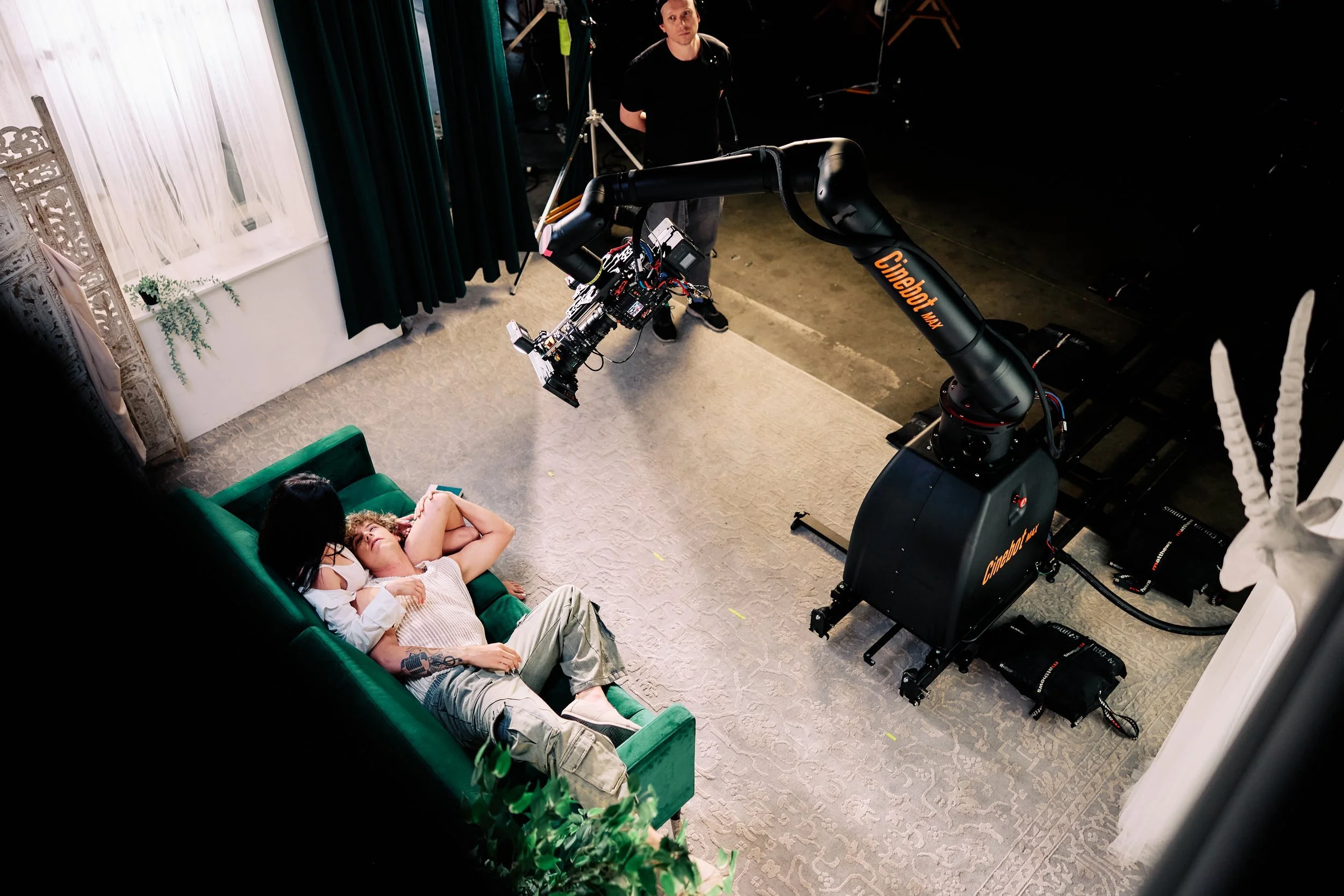
Photograph: Sean Jorgensen. Original image from Cinebot Vegas.
A commercial can begin with a detail and end with an entirely different understanding of the scene. A hand adjusts a cuff. The camera moves past a foreground edge. A private moment becomes a room full of possibility. The reveal gives the movement a reason: each change in framing tells the audience something new.
For a director, the question is how deliberately that discovery needs to unfold. If the camera must arrive at the same visual beats across multiple takes, motion control deserves a place in the treatment. MRMC describes the Cinebot Max as a system with repeatable camera moves for studio and on-location applications. The creative value comes from deciding what those moves reveal, and when.
Start with what the audience learns
Before drawing a camera path, write the change in audience understanding. “Move backwards and rise” describes mechanics. “Begin inside an intimate moment, then reveal the scale of the experience” gives the cinematographer, production designer and motion-control crew a shared intention.
Consider a hypothetical Las Vegas hospitality campaign. The opening isolates a guest's preparation for an evening out. A shift in viewpoint reveals another person waiting nearby. The final composition opens the room and establishes the experience the brand wants to sell. This is an imagined concept, not a description of a Cinebot Vegas client production.
The useful treatment has three discoveries: the personal detail, the relationship and the destination. Each needs a readable frame. If the middle beat disappears in a flourish of movement, the shot may look elaborate while losing its meaning. Decide which information must remain visible and which can wait. That hierarchy should shape the camera move before speed becomes the conversation.
Use repeatability to explore the performance
A programmed camera path can give the creative team a consistent movement to work against. In the hypothetical campaign, the second performer might look up earlier in one take and later in another. Keeping the intended camera timing consistent creates a clearer basis for comparing how those choices affect the reveal.
That does not make the performance automatic. A repeatable camera move does not make a gesture, a curtain or a lighting change repeat identically. The director still has to decide where variation helps the scene and where it interrupts the intended discovery. Treat the move as a framework for performance, with deliberate room for the people inside it.
Repeatability also becomes relevant when a concept calls for separately photographed elements to share a camera move. Raise that intention with the cinematographer, motion-control crew and VFX team before shooting. Matching the camera path is one part of that plan; it does not by itself guarantee a finished composite. Keep the creative promise tied to what the whole production can deliver.
Design for the space between the opening and the reveal
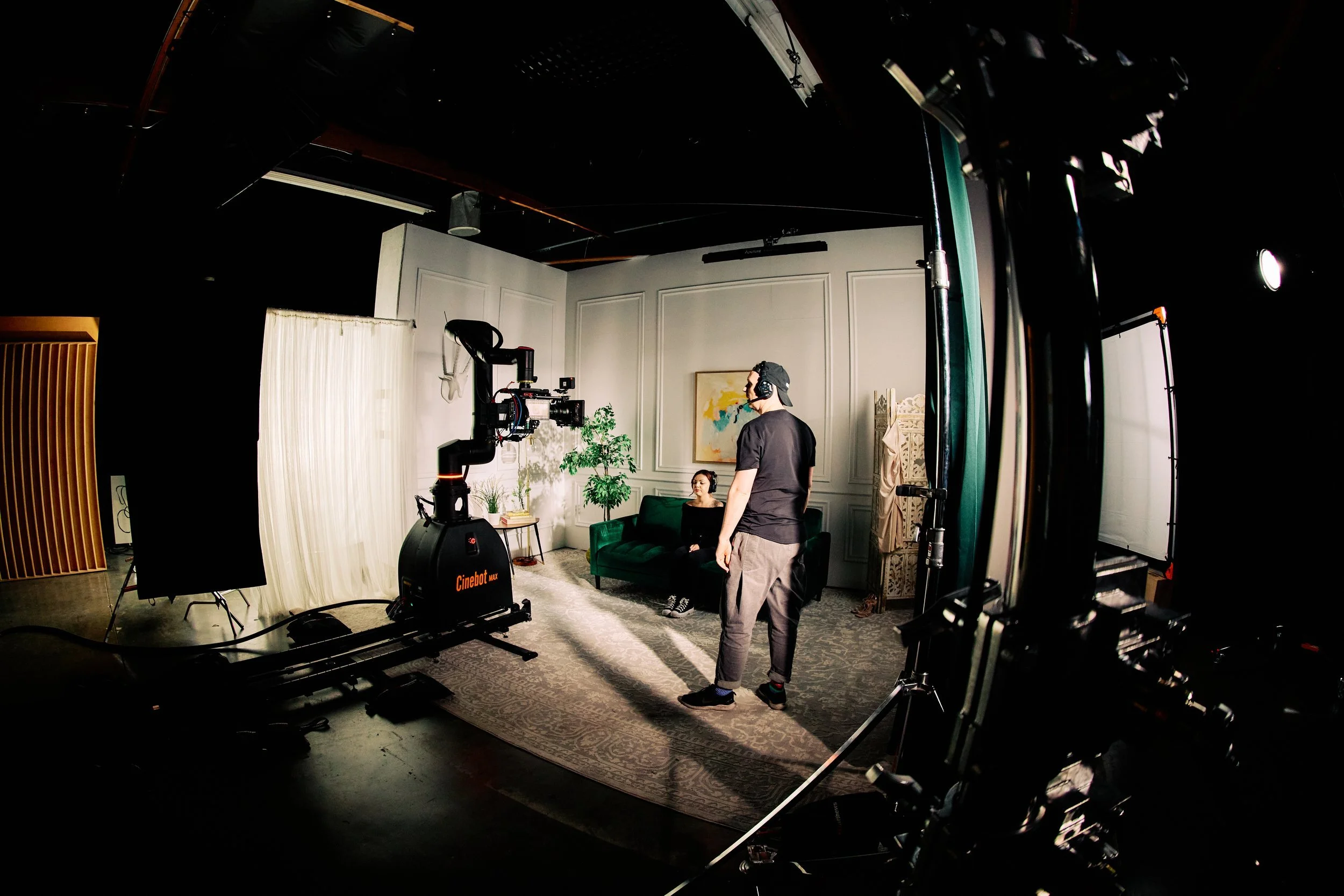
Photograph: Sean Jorgensen. Original image from Cinebot Vegas.
The distance between two frames can carry the idea. A camera that travels through a dressed environment can change the relationship between foreground, performer and background. For the hospitality concept, the final room should feel earned by the journey from the opening detail. Simply making the move longer would not strengthen that relationship.
The Cinebot Vegas setup includes MRMC Cinebot Max with over 20 feet of track, configured for large-scale commercial studio and on-location productions. That gives the creative discussion a scope beyond tabletop work. Track travel and arm movement can be considered together when developing a shot that connects a performer to a larger environment.
The installed track length is not a promise of unobstructed camera travel on every set. Share the opening and closing frames, the intervening action and the proposed environment with the crew so they can assess the actual move. A beautiful endpoint is only useful if the passage into it works for the camera, the set and the performance.
Let Las Vegas shape the creative choice
For a Las Vegas campaign, the location decision should follow what the brand needs the viewer to recognize. In the imagined hospitality spot, ask whether a specific property's interior is essential to the message. If recognizable architecture is the reveal, it should influence the treatment from the start. A generic room followed by a logo may miss the reason to film there.
If the concept instead depends on a controlled visual world, a studio set may give the production designer a clearer starting point. The brief can define which edges conceal the next discovery, where the background becomes visible and what belongs in the final frame. Cinebot Vegas supports both studio and on-location work; choose between them through the needs of the shot.
For a proposed Las Vegas venue, bring the location team into the conversation about access, the filming area and when the space can be available. Those answers help determine whether the treatment fits the real place. Do not approve a room-scale reveal from an inspiration image alone: evaluate the environment that will actually surround the move.
Brief the reveal before choosing the flourish
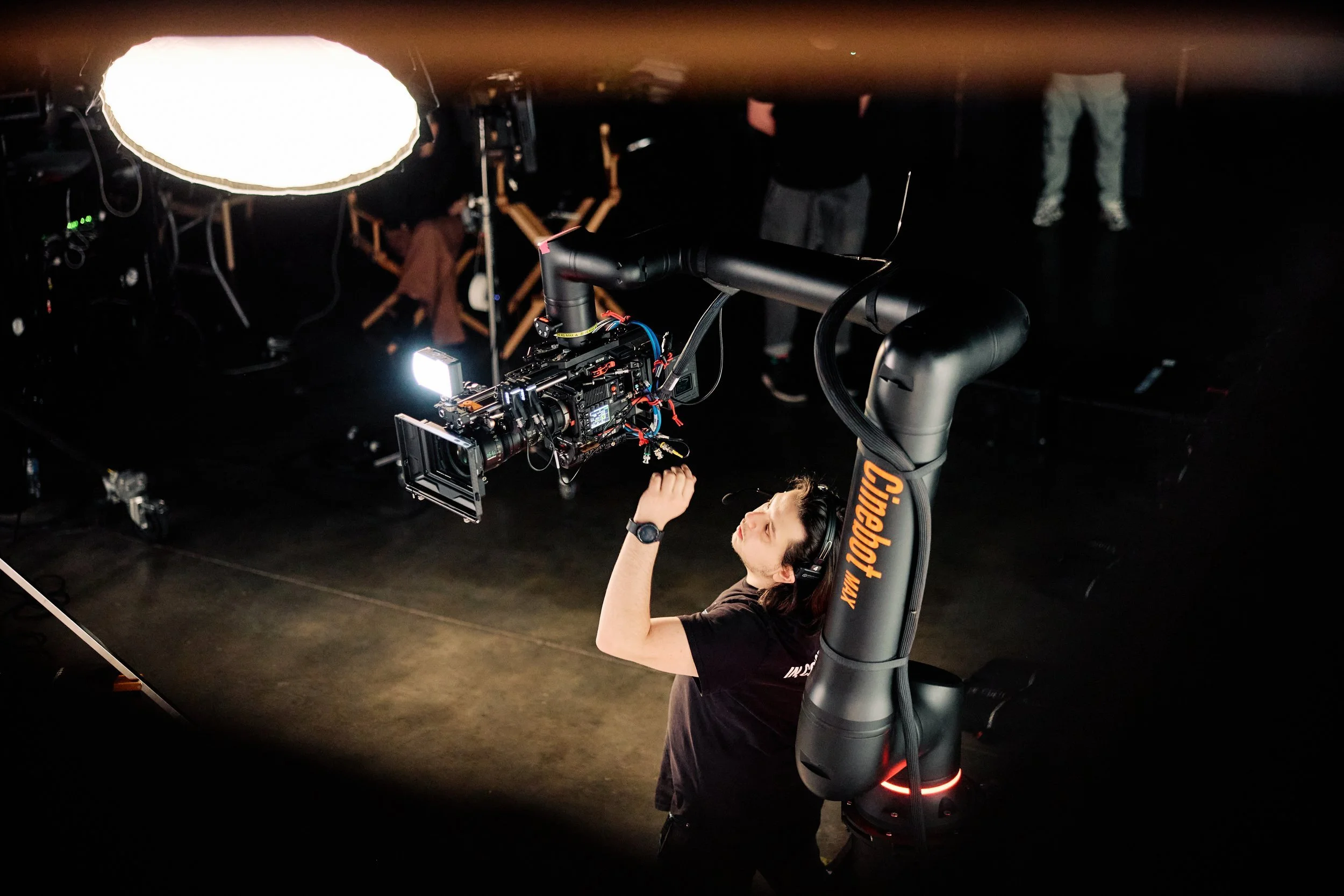
Photograph: Sean Jorgensen. Original image from Cinebot Vegas.
A useful first conversation can start with a few clear decisions:
What should the viewer understand at the beginning and at the end?
Which discovery must happen at a specific point in the move?
What needs to stay consistent across takes, and what should vary?
Does the real Las Vegas location carry the message, or should a set be built around it?
Where must the product, performer or brand identity become readable?
Motion control is a strong creative candidate when those answers depend on a planned, repeatable journey through the frame. If the idea depends on following unpredictable action, reconsider how tightly the camera should be prescribed. The technology earns its place when precision protects the story's crucial moment.
Bring the treatment, reference frames and intended location to discuss the reveal with Cinebot Vegas. Begin with what the audience should discover; develop the movement around that ambition.
Images are original Cinebot Vegas website photographs, reused without AI alteration. Photography credit: Sean Jorgensen, as identified in the files' embedded rights metadata. The campaign concept in this article is hypothetical; the photographs do not depict that concept.