
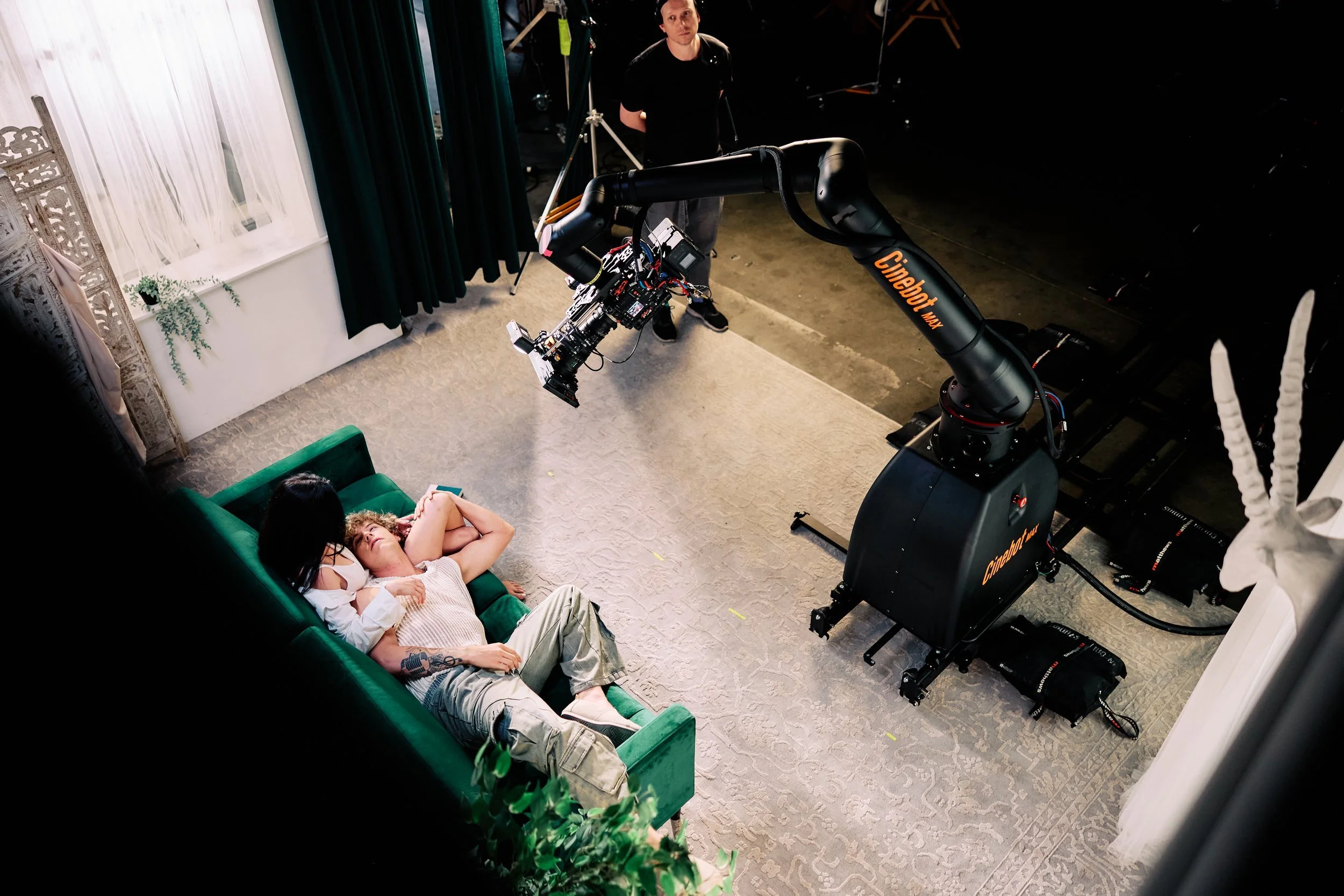
Photograph: Sean Jorgensen. Original image from Cinebot Vegas.
The camera completes the proposed move. Everyone can see that it travels through the set, but the conversation afterward remains vague: perhaps the arrival should feel stronger, perhaps the performance needs more time, perhaps the background is distracting.
A rehearsal becomes more useful when the team knows which decision it is there to resolve. For a commercial production, that might be whether a camera arrival gives the product enough emphasis or whether the performer's action reads at the intended rhythm. Define the uncertainty before asking for another version of the move.
Cinebot Vegas describes motion-control production as a collaboration in which the move, camera package and real operating environment are assessed together. A creative review belongs within that wider production conversation. It does not replace the crew's technical assessment or establish that an untested final setup is ready.
Name the decision before reviewing the move
Imagine a hypothetical Las Vegas hospitality commercial in which a performer crosses a lounge set before the camera settles on a final portrait. The intended feeling is calm and assured. This is an invented treatment, not a description of a Cinebot Vegas project.
The unresolved question might be whether the camera arrives before the performer has settled into the closing expression. That is specific enough to review. “Make the shot more premium” leaves the director, camera team and performer to interpret the request separately.
Write the decision as an observable relationship: the performer should have time to settle before the final image needs to register. Then agree which part of the proposed rehearsal can help the team judge that relationship. A review of an empty set can reveal framing, but it cannot show the final performer's expression.
Choose a representative comparison
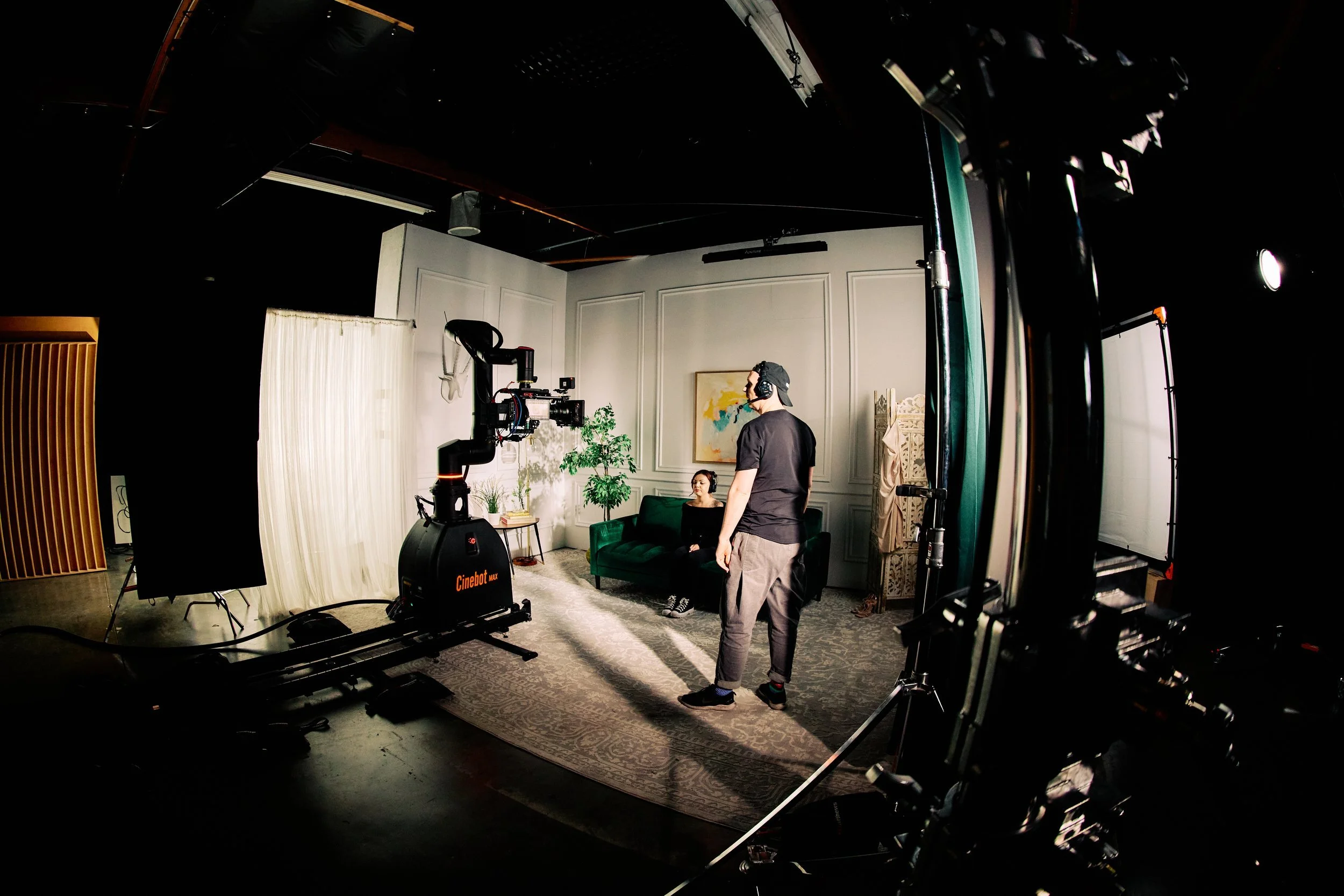
Photograph: Sean Jorgensen. Original image from Cinebot Vegas.
Decide what needs to be present for the review to mean something. In the imagined lounge scene, a stand-in may help the team discuss body position and the passage through the frame. The result still needs to be understood as a stand-in review, with final performance and wardrobe questions unresolved.
The same distinction applies to the camera package and environment. If the lens, background or lighting differs from the proposed production, name that difference when presenting the test. Otherwise the team may approve an image relationship that changes when the actual elements arrive.
Ask the crew what a useful representative rehearsal can include, given the production's stage and available setup. Do not present a plan view, animation or partial test as interchangeable with the final camera image. Each can answer a different question; none should silently inherit the authority of the others.
Change the thing you are trying to understand
In the lounge example, the director could explore a different cue for the performer while the camera team maintains the agreed move for that comparison. Alternatively, the team might evaluate a revised camera arrival against the same intended action. State which comparison is being made.
Changing the cue, path, lens and background together may produce an appealing result, but it makes the reason for the improvement harder to identify. When several changes are necessary, record them honestly rather than describing the review as a controlled comparison.
Repeatable camera movement can provide consistency in the camera's part of the shot. It does not make a human gesture or expression repeat identically. Review the whole image and allow the director to judge where performance variation helps the campaign. The purpose is a clearer creative decision, not a claim that the robot controls every production variable.
Agree who can close the question
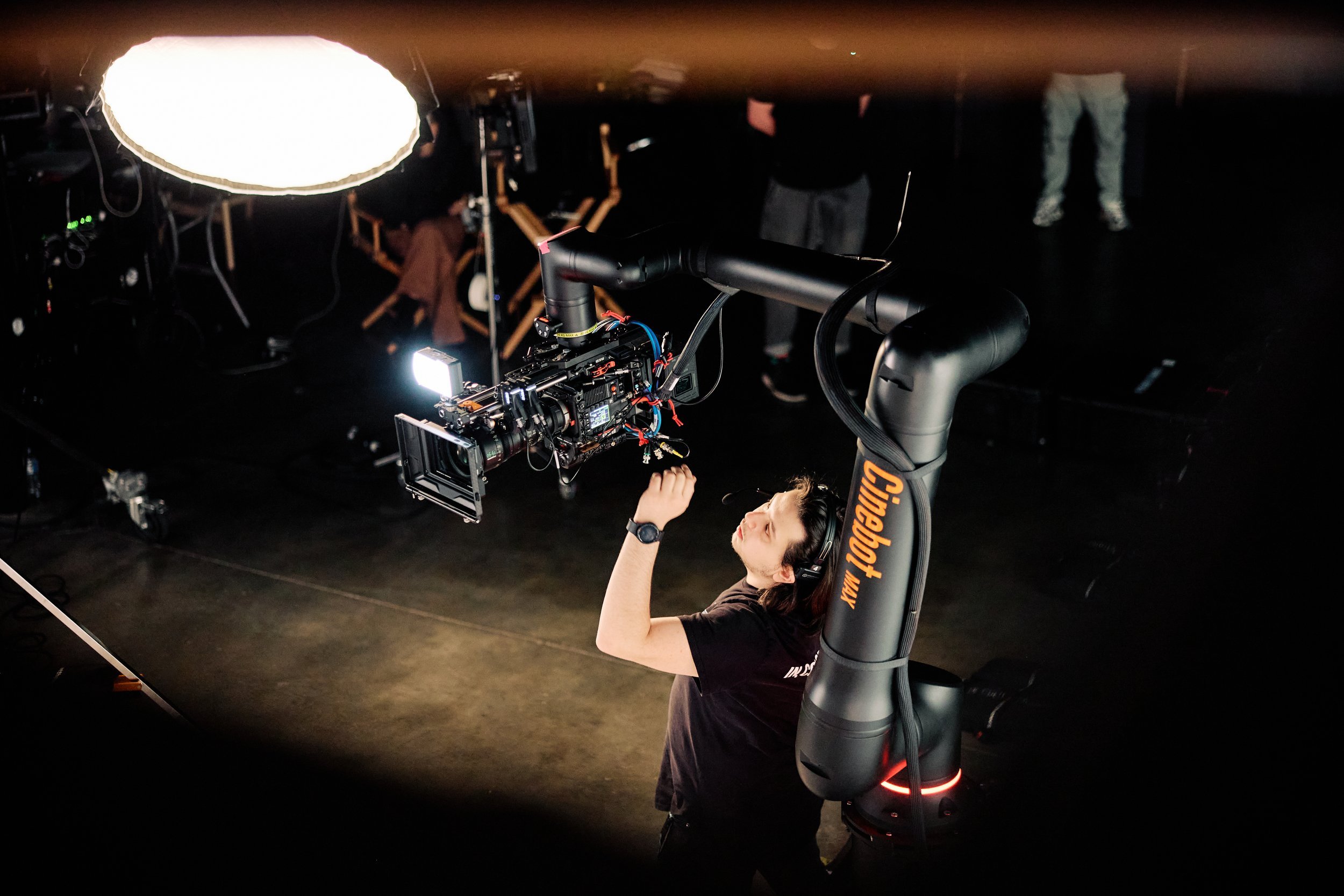
Photograph: Sean Jorgensen. Original image from Cinebot Vegas.
The people reviewing a rehearsal should understand what they are being asked to decide. A director's preferred performance rhythm, a cinematographer's image judgment and a client's campaign priority are related, but they are not identical approvals. Make the intended decision and the person responsible for it visible in the review conversation.
For the hypothetical commercial, the team might agree that the revised cue gives the closing expression enough time. Record that as the outcome. Avoid broad language such as “the shot is approved” if the final lens, location access or another essential production choice remains open.
If the review exposes another question, give it a separate next step. A distracting background may require production-design discussion; a transition may need the editor's assessment. Sending every issue back as a request for another robot move can obscure the department or decision that actually needs attention.
Carry the result into the real shoot
For a Las Vegas location commercial, note whether the review used the actual venue or a proposed set arrangement. The real filming area, access and available production window still need assessment. A convincing test in one environment is useful evidence for discussion, not automatic approval for another.
Cinebot Vegas's owner-confirmed setup includes Cinebot Max with over 20 feet of track for large-scale studio and on-location commercial work. That gives the discussion scope beyond a small product setup, while the crew must assess the specific route, camera package and environment. Installed track length alone does not establish usable travel for every shot.
The earlier article on the preparation handoff covers the information to share with the team. Add the rehearsal's decision, the version reviewed and the questions still open to that conversation. Keep the result precise enough that the next department can act on it.
Discuss the rehearsal with Cinebot Vegas. Bring the creative uncertainty you want to resolve and the evidence you expect the review to provide. A rehearsal has a clearer purpose when everyone knows what they are looking for.
Original Cinebot Vegas website photographs reused without AI alteration. Photography: Sean Jorgensen, identified in embedded rights metadata. The lounge commercial is hypothetical; these photographs do not document that treatment or a specific rehearsal result.