
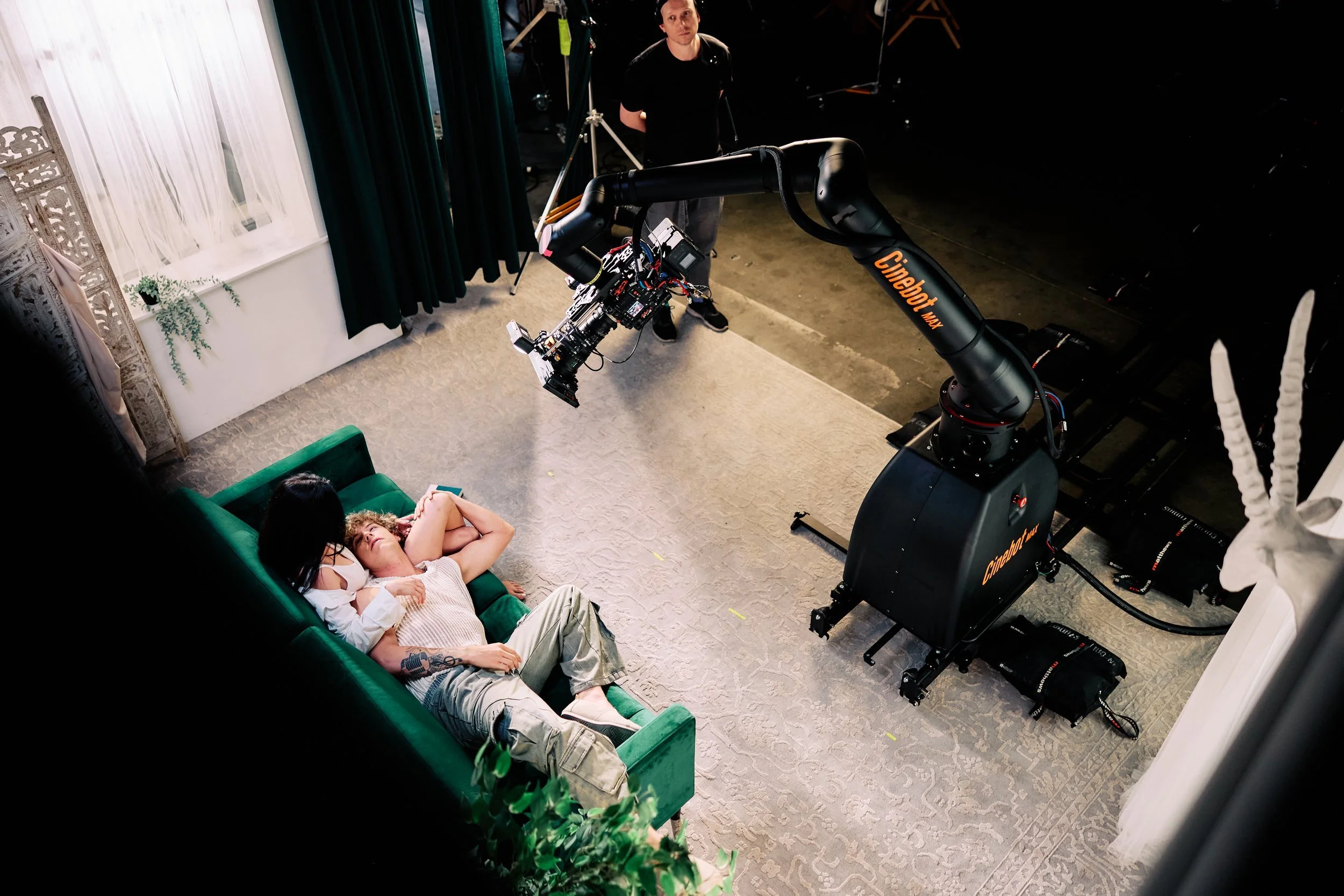
Photograph: Sean Jorgensen. Original image from Cinebot Vegas.
A performer turns toward the camera in one outfit. Across a cut, the movement continues in another. The camera seems to carry the audience through the change, while the commercial moves from one expression of the brand to the next.
That transition begins with an editorial decision: what should change, and what should the viewer recognize as continuous? Repeating a camera move can support the relationship between two takes. It cannot decide where the cut belongs or make every element within the frame match.
MRMC identifies repeatability as a feature of its motion-control approach. For a commercial director, the creative opportunity is to give that consistency a clear purpose. Design the relationship between the images before treating a repeated path as a finished transition.
Make the change carry the message
Consider a hypothetical Las Vegas fashion campaign built around the shift from a daytime look to an evening collection. This is an invented treatment, not a Cinebot Vegas production. The performer turns through the same broad action in two separately filmed takes, with wardrobe and the visual atmosphere changing between them.
The transition should communicate that shift without forcing the audience to work out whether the apparent jump is intentional. A coherent action can connect the images, while the difference in wardrobe supplies the campaign information. If the movement draws more attention than the change, the effect may overwhelm the idea.
Write the transformation in a sentence before discussing the mechanism. “The same person moves from a relaxed daytime mood into an evening look” gives the director and editor a shared intention. “We want a seamless transition” describes a finish without explaining why the audience should care about it.
Choose the detail that survives the cut
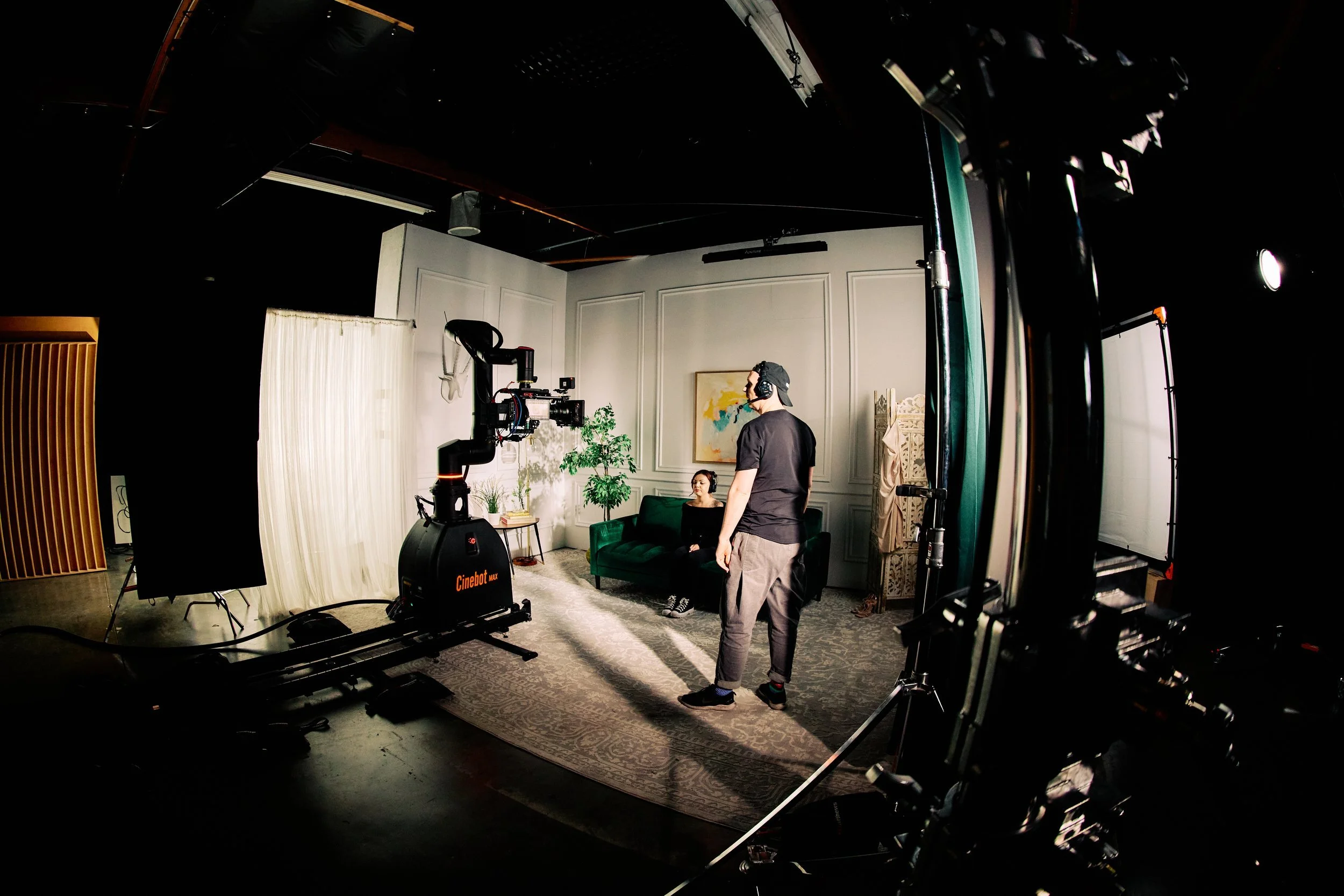
Photograph: Sean Jorgensen. Original image from Cinebot Vegas.
For the imagined fashion spot, the team might protect the position of the performer's face as the strongest visual connection. Another treatment might connect a hand gesture or the direction of a shoulder turn. Decide which detail carries the join rather than asking every visible feature to be equally important.
Compare the outgoing and incoming images together. Does the eye have somewhere consistent to land? Does a changed silhouette help the transformation or distract from it? The answer may require a different performance cue, revised framing or a change in the intended cut point.
This is also a reason to discuss the proposed edit before the set is finalized. A background line that seems harmless in either take alone may become conspicuous when the images meet. A deliberate change in the environment can be part of the idea, but an accidental shift should not become the audience's main discovery.
Separate camera consistency from performance continuity
A repeated camera route gives the crew one element to control across takes. The performer still interprets the action each time. Hair, clothing and other moving details may respond differently. Treat those differences as part of the transition discussion, not as evidence that repeating the camera will make the whole scene identical.
In the hypothetical campaign, a turn can reach a similar body position with a different expression or rhythm. The director needs to decide which variation is useful. An expressive take may be right for a standalone shot while offering a less convincing handoff to the next image.
Bring the cinematographer, motion-control team and editor into that choice. Where the concept depends on compositing or another finishing technique, involve the VFX team before committing to the treatment. A match cut and a constructed composite ask different questions of the photographed material. Neither should be promised from a camera-path demonstration alone.
Judge the join with the editor
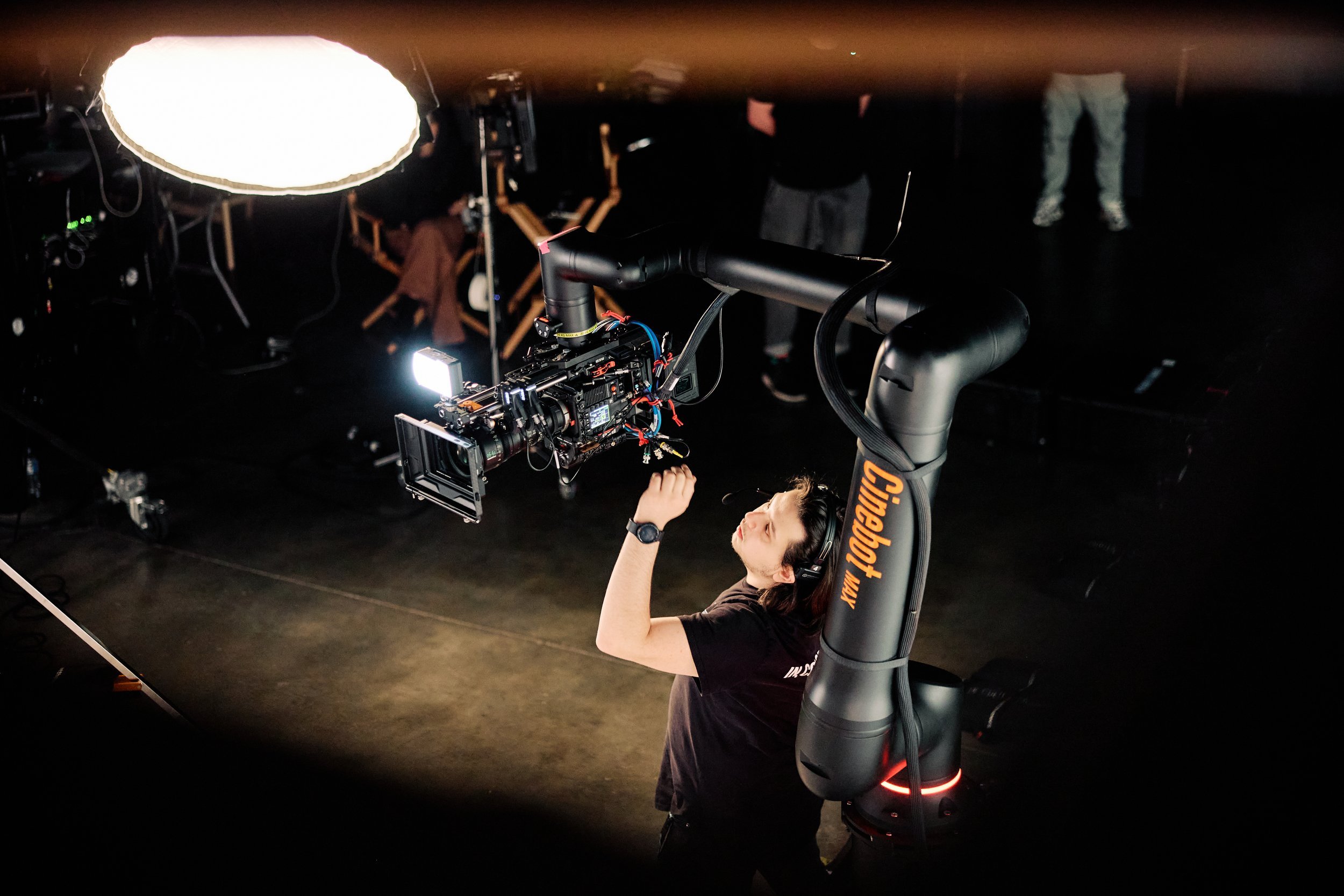
Photograph: Sean Jorgensen. Original image from Cinebot Vegas.
Review representative versions of both sides as an edit. Playing each take independently can confirm that it looks attractive while leaving the actual transition unresolved. The useful test is whether the audience reads the intended change when the images meet at the proposed rhythm.
If the cut feels abrupt, name the visible problem before adding complexity. Is the subject landing in a different part of the frame? Is the gesture carrying a different energy? Is a lighting change more prominent than the wardrobe? Those observations give the production a clearer revision than asking for a more elaborate move.
The join does not always need to disappear. A deliberately graphic cut can make a campaign change feel decisive. The creative team should agree whether the transition is meant to be unnoticed, surprising or visibly stylized, then judge the result against that intention.
Let the real production shape the transition
For a Las Vegas commercial, decide whether the transformation belongs in a controlled set or depends on a recognizable location. A venue's architecture may carry useful brand context; a studio treatment may make a designed visual relationship easier to develop. The choice should serve the concept and the actual production plan.
Cinebot Vegas supports motion-control production in the studio and on location. Its owner-confirmed setup includes Cinebot Max with over 20 feet of track for large-scale commercial work. That scope supports a conversation involving performers and substantial environments, while the crew must assess the proposed move against the real space and camera package.
Bring both sides of the intended transition when you discuss the transition with Cinebot Vegas. Explain what changes, which visual detail should connect the takes and how the editor expects the join to feel. Those decisions give repeatability a creative job to do.
Original Cinebot Vegas website photographs reused without AI alteration. Photography: Sean Jorgensen, identified in embedded rights metadata. The fashion campaign is hypothetical; these photographs do not depict that treatment or demonstrate a completed transition.