
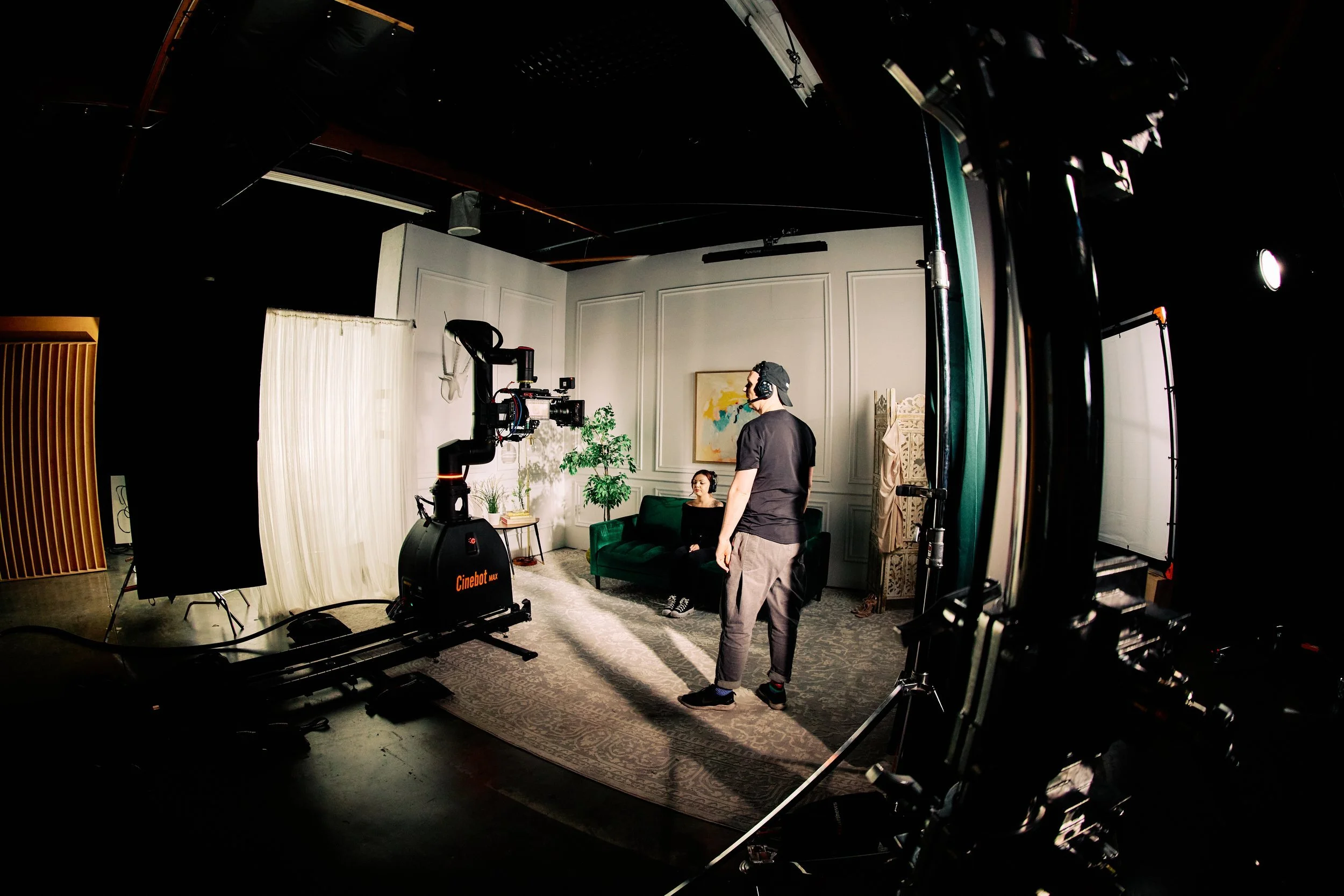
Photograph: Sean Jorgensen. Original image from Cinebot Vegas.
Two performers exchange a jacket as the camera moves past them. In the wide version, their distance from one another gives the gesture its meaning. In the vertical version, one performer disappears just before the handoff. The camera movement can be beautifully repeatable while the campaign's central action becomes difficult to read.
A commercial intended for both wide and vertical delivery needs a composition decision before the move is settled. The question is whether both versions can preserve the same idea through the whole shot, or whether each deserves its own take. Treating the second version as an export setting leaves that question unanswered.
Consider the jacket exchange as a hypothetical Las Vegas apparel campaign. It is an invented treatment, not a Cinebot Vegas production. The useful starting point is what the audience must understand: who passes the jacket, who receives it and when the garment becomes the focus.
Give each frame a creative purpose
Aspect ratio describes the relationship between a frame's width and height. Adobe's aspect-ratio explanation identifies widescreen 16:9 and vertical 9:16 as different frame shapes. That distinction describes the container; it does not decide what belongs inside it.
For the imagined campaign, the wide frame might establish a relationship between two people across a substantial set. The vertical version might need to preserve the exchange while giving the jacket a stronger presence. Agree whether those are two expressions of the same beat or different storytelling priorities.
Neither version should inherit an accidental compromise. If the vertical image loses the person receiving the jacket, it may become a portrait of someone extending an arm. If the wide version pushes both performers into an unnecessarily tight central group, it may lose the spatial tension that made the shot interesting. Judge each frame on its own terms.
Protect the relationship through the move
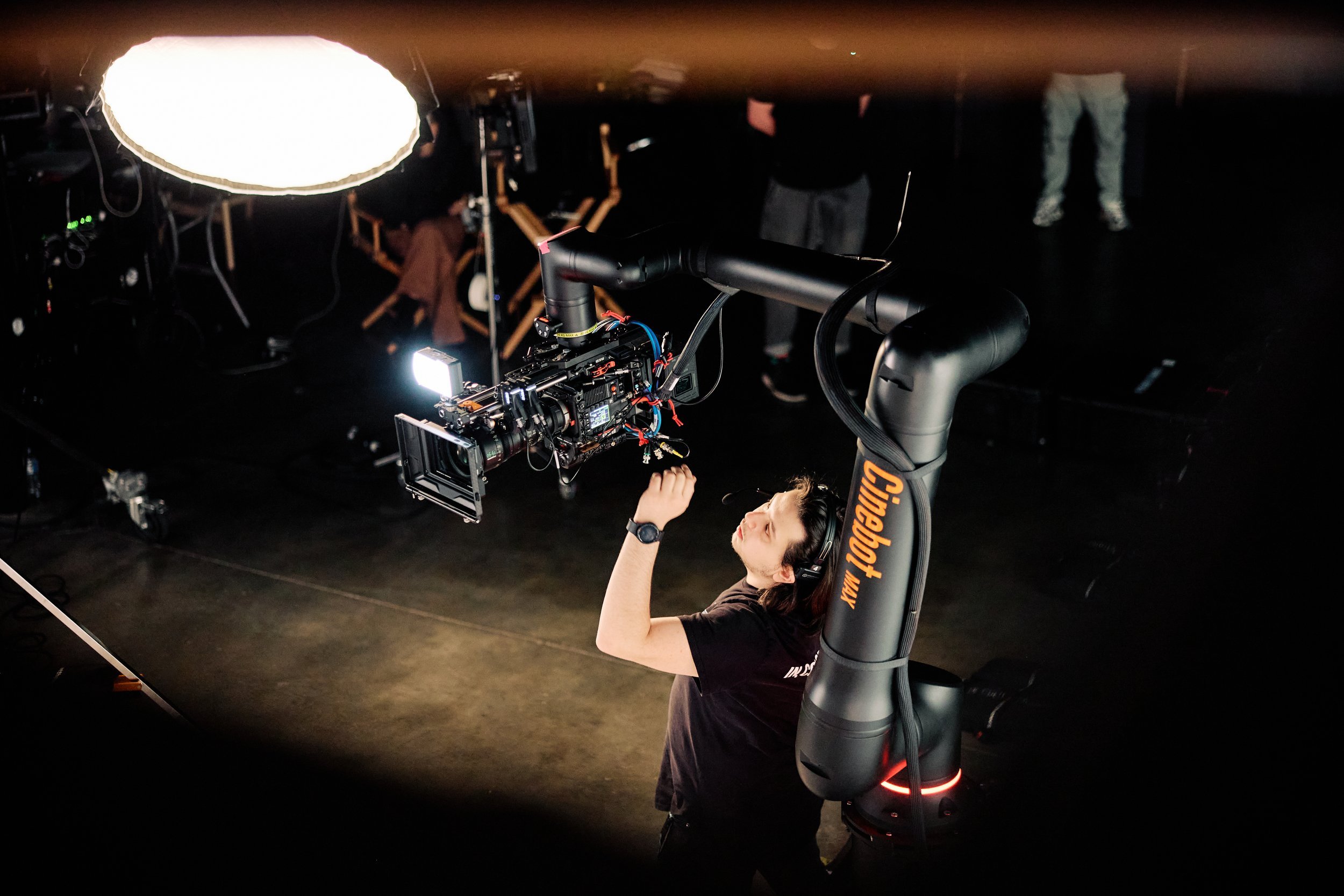
Photograph: Sean Jorgensen. Original image from Cinebot Vegas.
An attractive opening and closing image can hide a weak passage between them. Review both proposed versions through the approach, the exchange and the departure. The moment the jacket changes hands matters more than whether each performer fits comfortably at the finish.
Ask the cinematographer and editor to look at the actual camera image in both intended frame shapes. In the hypothetical treatment, the wide composition could keep both faces visible while a narrow selection loses the receiving hand. Moving that selection sideways might recover the hand but remove the giver's expression. Name the conflict instead of approving the wide image and assuming the other version will follow.
Make a short list of the information the shot needs to retain: the two performers' relationship, the visible handoff and the garment's final position. These are creative priorities, not a rule that every subject must stay centred. A deliberate partial view can work if it carries the idea; an unintended omission needs another decision.
Decide what a shared take can carry
A crop selects part of an existing image. It can change which information is visible, but it cannot recover an action that the recorded view never showed. For the apparel concept, ask whether a narrower selection can follow the exchange without turning it into a different event.
A shared take may be a useful proposal when both versions keep the important relationship readable. Review where the selection would sit throughout the movement, including any proposed repositioning in the edit. Do not judge it from a single still. The editor should also assess the actual recorded material against the required delivery specifications; frame shape alone does not establish sufficient image quality.
If the team changes performer spacing to accommodate both versions, watch what happens to the original wide idea. Solving one framing problem by weakening the relationship in the other frame is a creative tradeoff. Make that tradeoff visible while there is still an opportunity to revise the shot.
Let a separate take have a reason
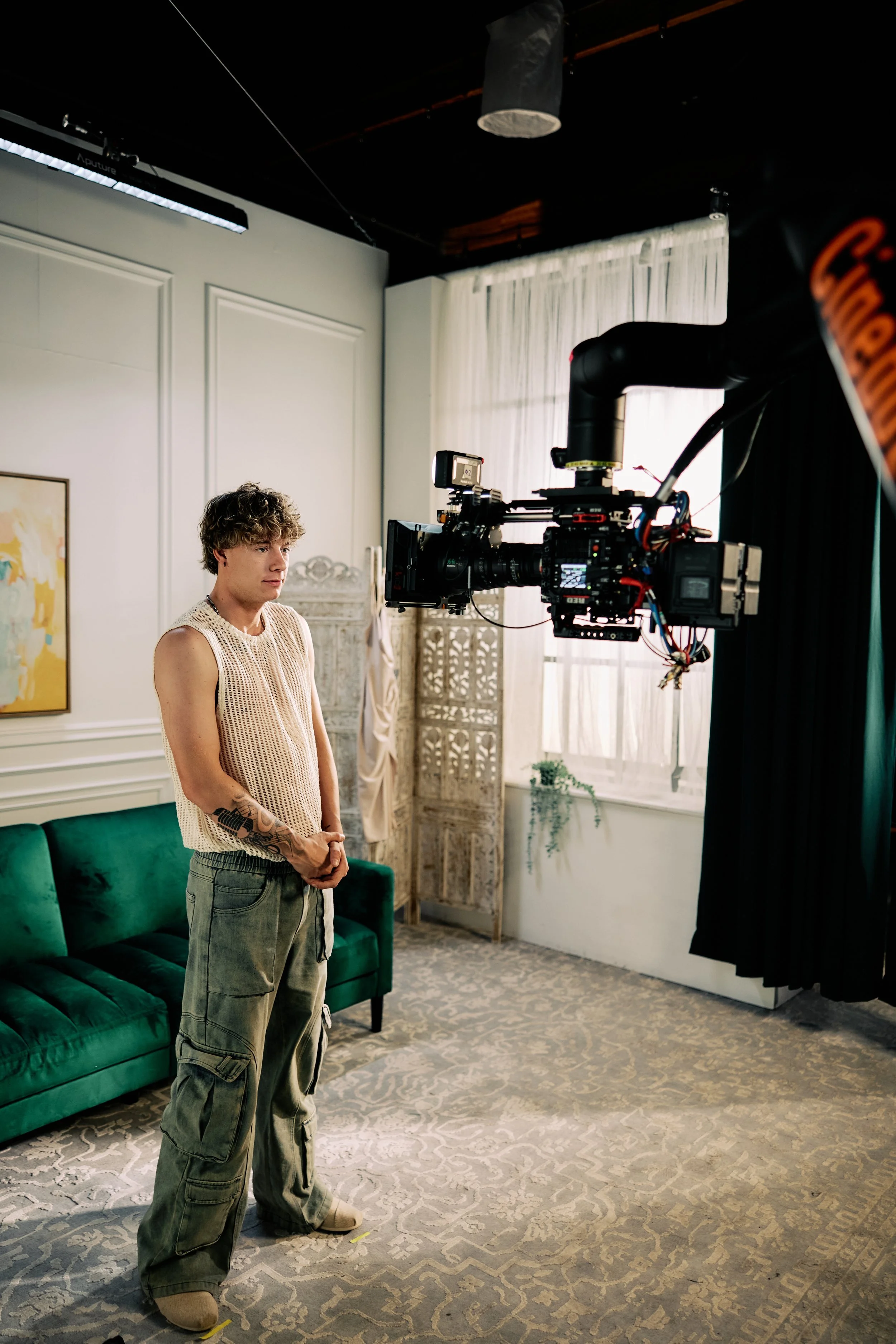
Photograph: Sean Jorgensen. Original image from Cinebot Vegas.
A separate take becomes worth discussing when the versions need different arrangements to communicate clearly. In the imagined campaign, a more layered performer arrangement might serve the vertical handoff, while the wide version retains the lateral relationship. The aim is to preserve the campaign beat, rather than force identical geometry into both frames.
Keep the shared intention explicit: the jacket should pass between the same two people with the same sense of connection. Then identify what changes for the alternative, such as blocking, viewpoint or timing. A second take does not need a more elaborate camera path simply to justify its existence.
Any camera-package or mounting proposal belongs with the cinematographer and motion-control crew. Do not assume a particular orientation, lens or accessory is available because it would suit a sketch. A revised setup needs its own assessment, and human performance will vary even where camera movement can repeat.
Bring both versions into the production conversation
For a Las Vegas location campaign, decide whether the setting must remain recognizable in both versions. Architecture visible at the side of a wide frame may disappear from a narrow selection. If that place carries the campaign's meaning, include it in the composition discussion rather than leaving it to a later crop.
The owner-confirmed Cinebot Vegas setup includes Cinebot Max with over 20 feet of track for large-scale studio and on-location commercial work. That supports a conversation about performers and substantial environments. The crew still needs to assess the specific camera package, route and real space; installed track does not establish unobstructed travel for a proposed shot.
Discuss the two versions with Cinebot Vegas. Bring the intended frame shapes, the action each must preserve and any point where their needs diverge. The strongest common plan is one the team has judged in both images, with a clear reason for sharing a take or making a separate one.
Original Cinebot Vegas website photographs reused without AI alteration. Photography: Sean Jorgensen, identified in embedded rights metadata. The apparel campaign is hypothetical; these photographs do not depict that treatment or demonstrate a wide-and-vertical delivery test.